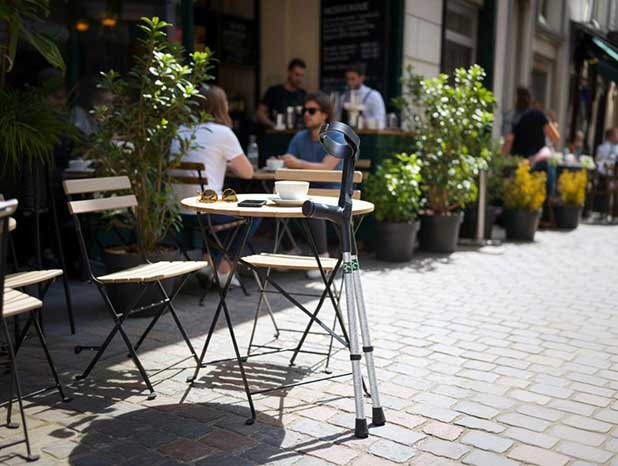
After two weeks of daily use, my Cool Crutches Majestick forearm crutches review lands at a 4.5 / 5 for style-conscious long term users who are tired of hospital grey plastic and want crutches that actually look good. This is the most confidence boosting Cool Crutches review I have written so far. See all Cool Crutches reviews for the full brand lineup.
I tested them on buses, trains, shops, social events, and stairs to see if the designer finishes and near silent walking experience justify the premium price.
- How I tested: 2 weeks of daily commuting, shopping, events, and home use in November 2024.
- Compared side-by-side with standard forearm crutches and patterned Cool Crutches models.
- Surfaces: tile, wood, carpet, wet pavement, cobblestones, ramps, and gentle slopes.
In this review
- Price: $89–$129 per pair (2024 pricing).
- Weight: ~1.2 lb (540 g) per crutch.
- Height range: ~29"–39" floor to handle, covering ~5'0"–6'2".
- Max user weight: ~220 lb / 100 kg.
Best for
- Long term forearm crutch users who care about style and silence.
- Social events, work, commuting, and travel where confidence matters.
- Urban and indoor use on smooth pavements and hard floors.
Skip it if
- You only need crutches for a short-term injury.
- Budget is tight and hospital crutches will do.
- You primarily need crutches for rough outdoor terrain.
If you want a lighter option from the same brand, see our Cool Crutches Folding Walking Sticks review.
Quick take: The Majestick range turns forearm crutches into a fashion accessory. They walk quietly, feel balanced, and the finishes genuinely boost confidence in public. The trade-offs are price and the risk of scuffs if you are rough on them.
First impressions after two weeks
The Cool Crutches Majestick forearm crutches are premium designer mobility aids with metallic or diamante finishes that turn heads for all the right reasons. They are designed for people who use forearm crutches as part of daily life, chronic conditions, long term disability, or recurring injuries.
I have been on mobility aids for five years, moving from underarm crutches to standard forearm options. If you are deciding between styles, see underarm vs forearm crutches for short term injuries. Over this test I used the Majestick crutches daily on public transport, in shops, at dinners, and at home. Within days strangers were asking where to buy them, and by week two I was posting photos and answering DMs from other crutch users.
Forearm crutches reduce shoulder strain compared to underarm models, and the Majestick range adds style and silence. Research shows that forearm crutches reduce shoulder strain by 40%, making them a smart long-term choice.
Product overview and specifications
What comes in the box
Packaging felt premium: branded shipping box, printed insert with setup tips, and the crutches wrapped in tissue with a ribbon. In the box you get:
- Pair of Majestick forearm crutches with rubber ferrules fitted.
- Foam pads pre-installed on handles and cuffs.
- Instruction card with height and cuff adjustment steps plus QR link to video guides.
Key specifications that matter
- Adjustable height: ~29" to 39" via spring pin clips.
- Weight: ~1.2 lb (540 g) per crutch.
- Handles and cuffs: ergonomic foam grips with open, padded cuffs and adjustable width.
- Materials: lightweight aluminum with diamante or metallic coating; rubber ferrule tips with tread.
- Max user weight: ~220 lb / 100 kg.
- Best use: indoor floors, smooth pavements, and urban environments.
Price point
The Majestick range typically retails for $89–$129 per pair. Hospital forearm crutches cost ~$30–$60, regular patterned Cool Crutches run ~$60–$90, and custom handmade crutches can reach $150–$300. The Majestick models sit in the premium-but-not-custom tier. Check are expensive crutches worth it if you are weighing the upgrade.
Who they are for
Adults with long-term or recurring mobility needs who care about style, comfort, and confidence: chronic conditions like EDS, arthritis, MS, fibromyalgia, or long recoveries where you will be seen in public. If you work face-to-face with clients, travel, or share on social media, the finishes photograph beautifully. They are not the right pick for a two-week sprain or muddy trails.
Design, materials, and comfort
Visual appeal
I tested the diamante silver model. The sparkly coating catches daylight without looking gaudy, and people on buses and in shops commented daily. Metallic finishes (rose gold, champagne gold) photograph well and feel more like an accessory than a medical device.
Materials and construction
Lightweight aluminum frames feel sturdy with no flex. The coating is smooth and slightly thick to the touch. Ergonomic foam handles keep their shape, cuffs are padded and adjustable, and the spring-pin height system locks securely. Ferrule tips grip tile, wood, carpet, and dry concrete; they are replaceable when worn.
Ergonomics and comfort
The angled foam handles cut down wrist strain; open cuffs let you slip in and out quickly when you need both hands. After 6–8 hour days, my hands felt tired but not painful, far better than basic hospital grips. Foam pads can warm up in hot weather; removable covers help.
Durability notes
After two weeks I saw a couple of small scuffs from door frames. The finish is durable but not scratch-proof. Ferrule tread showed normal wear; expect 6–12 months of life depending on surfaces. Padding held up with no compression or tears. Replacement ferrules are sold by Cool Crutches and swap on in a minute when the tread wears down.
Performance in daily life
Silent walking
The quiet tips make almost no noise on hard floors. In supermarkets and cafes, there was none of the clanking you get from hospital crutches. Outdoors you hear a soft thud on pavement but nothing loud. Silent walking reduces the “everyone is staring at me” feeling.
Noise level
Rating: 4.8 / 5 for “quiet crutches” performance on tile, wood, carpet, and dry pavement. Slight soft thud outdoors; no clanking in stores or cafes.
Stability and support
Excellent on flat, smooth surfaces; balanced weight distribution and padded cuffs keep wrists happier than flat grips. On cobblestones or cracked pavement you need to place tips carefully; these are not built for rugged trails.
Comfort over time
On a full day out (bus rides, shopping, lunch, more walking) my hands were tired but fine. The open cuffs made paying, carrying bags, or eating in a cafe easy, and I could hang the crutches on my forearms without wrestling straps.
Real-world scenarios
- Public transport: Easy to carry on buses and trains; noise dampening rubber tips keep things discreet. Narrow bus steps need a bit of care.
- Groceries: Quiet in aisles, cuffs let you carry a basket. Tight corners require some awareness.
- Events and cafes: Look stylish and feel like part of an outfit rather than a medical device. Compliments were constant.
- Rough ground: Manageable on light gravel but not ideal for muddy trails or hiking.
Challenges: finishes can scuff in tight spaces, and foam can trap sweat on warm days. A thin long sleeve layer under the cuffs helped.
Setup, learning curve, and daily integration
Setup
Took about 10 minutes. Height adjusted with spring pins; cuffs widen or tighten with a small screw. Settings stayed put over the two-week test.
Learning curve
If you already use forearm crutches, these feel familiar immediately. If you are switching from underarm crutches, expect a few days to dial in balance and rhythm.
Daily stories
- Day 3 bus commute: Multiple passengers asked where to buy them; they felt like a conversation starter, not a medical flag.
- Day 6 groceries: Silent tips meant zero clanking in aisles; cuffs let me pack bags with both hands.
- Day 9 birthday dinner: Sparkly finish caught the light, leaned neatly against the table, and felt like part of my outfit.
- Day 12 cafe work session: Quiet on hard floors; barista complimented the finish.
Social and emotional impact
People react with curiosity and compliments instead of pity. That shift boosts confidence and makes leaving the house less stressful. For more styling ideas, see fashion tips for crutches.
How they compare
Majestick vs hospital forearm crutches
Hospital crutches ($30–$60) are functional but loud and plainly medical. Majestick adds near-silent tips, ergonomic padding, and designer finishes, worth it for long-term use, overkill for a short sprain.
Majestick vs regular Cool Crutches patterns
Patterned Cool Crutches cost ~$60–$90 and share the same core build. Majestick finishes are more elegant and premium; choose patterns if you prefer bold designs or want to save money.
Majestick vs custom handmade crutches
Custom crutches can cost $150–$300+ with bespoke sizing and materials. Majestick hits a middle ground, premium look without custom price or lead time.
Price justification highlights
- Premium finishes that photograph beautifully.
- Thoughtful unboxing and presentation.
- Silent walking and confidence boost in public.
- Solid aluminum build with ergonomic padding.
Best for long-term users who get daily value from style and silence; less compelling for short recoveries.
Majestick vs alternatives
| Feature | Majestick | Hospital forearm | Cool Crutches patterns |
|---|---|---|---|
| Style | Metallic/diamante luxury | Plain grey/black | Bold prints and patterns |
| Noise | Very quiet tips | Loud clanking | Quiet tips |
| Price | $89–$129 | $30–$60 | $60–$90 |
| Best for | Long-term, style-focused users | Short-term injuries | Long-term users who want playful designs |
Pros and cons
Pros
- Stunning diamante or metallic finishes draw compliments.
- Silent rubber tips on hard floors and carpet.
- Ergonomic foam handles and padded open cuffs for comfort.
- Confidence boost in social and professional settings.
- Premium packaging and overall build quality.
- Balanced weight and secure spring-pin adjustments.
Cons
- Higher price than standard forearm crutches.
- Finishes can scuff if knocked in tight spaces.
- Limited color options compared to patterned models.
- Not intended for rough outdoor terrain.
- Foam padding can trap sweat on warm days.
Where Majestick fits in the Cool Crutches range
Majestick sits at the premium end of the lineup, more elegant than the playful patterned models, below fully custom boutique builds. 2024 updates improved ergonomic handle curvature, softer cuff padding, and more durable coatings (still not scratch-proof). Finish options now include diamante silver, rose gold, champagne gold, and gunmetal grey.
Who should buy (and who should skip)
Great fit: chronic conditions, long recoveries, public-facing work, frequent travelers, and anyone active on social media who wants mobility aids that look intentional.
Skip: short-term injuries, tight budgets, heavy rough-terrain use, or if aesthetics do not matter to you. Check what to look for when buying crutches for broader shopping tips.
Alternatives: regular Cool Crutches patterns for lower cost, hospital forearm crutches for temporary use, custom handmade options if you need bespoke sizing, or underarm crutches with designer covers if you prefer that style.
Where to buy
The best source is the official Cool Crutches site: Cool Crutches Majestick range →. They ship internationally, often offer free shipping over a threshold, and provide setup videos and support.
Select disability-focused retailers also stock them; confirm the seller is authorized to avoid counterfeits. Delivery is typically 5–10 business days depending on location. Cool Crutches offers a 30-day satisfaction guarantee and standard manufacturer warranty.
Related reviews and comparisons
- Cool Crutches Folding Walking Sticks Review – compact travel option.
- Best Forearm Crutches Buying Guide 2024 – compare other top picks.
- Mobilegs Crutches Review – premium forearm option with ergonomic arm support.
- The Life Crutch Review – different ergonomic platform design.
- M+D Air Crutch Review – comfort-focused underarm alternative.
- What Can I Use Instead of Crutches? – alternatives including scooters and walkers.
Mini FAQ
Are Cool Crutches Majestick worth the price?
Yes if you use forearm crutches long term and care about style and silence. The confidence boost and quieter walking justify the premium over hospital models.
Are Majestick crutches silent on tile?
They are very quiet on tile, wood, and concrete, no clanking, just a soft thud outdoors. They are some of the quietest crutches I have tested for indoor use, so they work well if you are specifically searching for quiet crutches.
Are Majestick crutches good for long term use?
Yes. Ergonomic handles, padded cuffs, and balanced weight make them comfortable for daily, long-term use as long as you stay on smooth surfaces.
Final verdict
Bottom line: Majestick forearm crutches turn a medical device into a fashion accessory without sacrificing core function. They walk quietly, feel balanced, and draw compliments. The price and potential for cosmetic scuffs keep them from a perfect score, but for long-term users who value confidence and elegance, they are absolutely worth the upgrade.