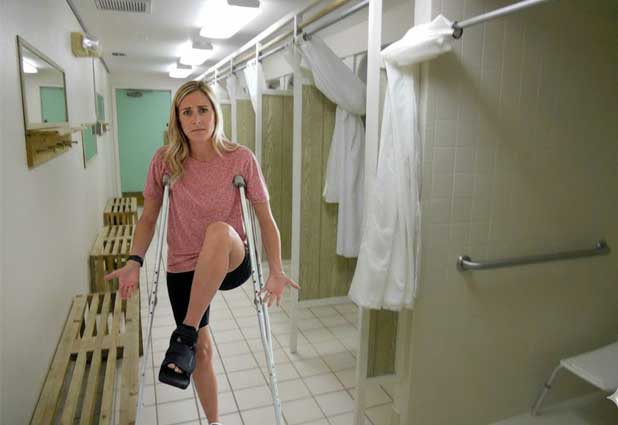
Quick summary
- Pack shower-safe mobility gear (chair, mats, spare tips) before you arrive on campus.
- Set up the stall so your injured leg never carries weight on slick tile.
- Clip or sling your toiletries so both hands stay on the grips while you walk.
- Plan shower times outside the breakfast rush to avoid crowds and wet floors.
- Loop housing and disability services into any request for grab bars, floor mats, or room swaps.
This guide shares student-tested routines, not medical advice—always follow the instructions from your surgeon or physical therapist about weight-bearing, wound care, and pain management.
Table of Contents
Pre-shower prep: make the bathroom a mission, not a sprint
College bathrooms are chaotic at the best of times, and showering with a broken leg in a dorm only amplifies the noise. When you are on crutches, give yourself five extra minutes to stage everything just outside the stall. Lay down your non-slip mat, park your shower chair, and confirm your crutches have solid traction before you cross into the shared bathroom. If facilities installed an accessible stall on your floor, claim it early—every resident learns who actually needs it.
Link up with your RA
Most residence halls keep extra mats, shower benches, or even suction grab bars in storage. Ask your RA or housing office if they can drop one off so you do not need to buy everything out of pocket.
Dorm shower checklist
These are the items students told us made the biggest difference during the first month back on campus. Toss them in a bin so you can move the entire setup between home and the dorm, or follow our packing list for returning to college after ACL surgery for a printable PDF, product picks, and recovery tools.
Traction + seating
- Folding shower chair or lightweight camp stool rated for wet surfaces
- Two quick-dry mats (one inside the stall, one outside for your crutches)
- Removable suction grab bar or tension rod for extra balance points
- Spare crutch tips or ice tips for tile that never dries
Storage + lighting
- Clip-on shower caddy or mesh crossbody bag
- Waterproof phone pouch if you track PT timers or telehealth notes
- Gooseneck clamp light for dim bathroom corners
- Hook-and-loop straps to secure towels or robes to your crutch handle
Comfort items
- Quick-dry microfiber towels so you are not juggling heavy terrycloth
- Long-handled sponge or scrubber to reach your legs without twisting
- Waterproof stool cover if the plastic seat feels freezing during winter
- Reusable squeeze bottles for soap and shampoo—lighter than full-size containers
Plan B kit
- No-rinse body wipes and dry shampoo for days when the hallway is flooded
- Travel-size deodorant, face wipes, and a washcloth in your room
- Small fan to dry the stall quickly if maintenance is slow
- Copy of your accommodation letter in case anyone questions your early-bird shower slot
Setting up the stall each time
- Stage outside first. Place the outside mat, hang your towel on a reachable hook, and keep your phone/med timer on a shelf within reach.
- Park the chair. Slide it into the stall so the back legs touch the corner wall—this keeps the seat stable even if someone bumps the curtain.
- Dry-run your exit. Before the water turns on, rehearse sitting, standing, and exiting with dry tile. If anything feels sketchy, fix it now.
- Keep one crutch inside. Set it within arm’s reach by using a removable hook or lean it against the wall so you never have to hop from the chair.
- Turn on water after you sit. Standing in the spray while you fumble for controls is when most slip-and-fall stories start.
Simple in-and-out sequence
- Crutch up to the threshold, plant the tips on the dry mat, and grab the mounted bar or wall for support.
- Step your good leg in first, keeping the injured leg slightly lifted or behind so it never bears weight unexpectedly.
- Use the bar or chair armrests to slowly lower onto the seat—do not rely on the curtain or shampoo shelf.
- When you finish, shut off the water, dry your hands, and stand using your grip point before rolling the chair back.
- Lead with the good leg back onto the dry mat, then bring the injured leg and crutches out together.
Borrow dorm power
If maintenance can angle the shower head downward or install a handheld sprayer, do it. A removable sprayer lets you wash from the chair without twisting or standing, and facilities often install one if you submit a request with your accommodation letter.
Adjusting for non weight bearing vs. partial weight bearing
In a dorm shower you must always honor your surgeon’s instructions. If you are told to stay completely non weight bearing, treat the space as a “sit down only” zone—use crutches to enter and exit, then keep all your weight on the shower chair and your good leg. No hopping, no “just one step.”
Partial weight bearing usually means a very light toe touch for balance while the chair and your strong leg carry most of the load. Ask your PT how that translates to a slippery dorm stall before you guess. If you wear a cast or boot, bring a waterproof cover or plastic protector instead of improvising with grocery bags and duct tape.
Carrying toiletries hands-free
Anything that forces you to white-knuckle your crutches is a fall risk. Use the same strategies we recommend in How to Carry Things on Crutches:
- Wear a crossbody mesh bag or fanny pack for soap, razor, and face wash.
- Clip a lightweight caddy to your crutch handle so bottles stay put while you walk.
- Keep an extra set of travel bottles in your room so you are never refilling at 1 AM when the hallway is chaos.
- Label everything—shared bathrooms eat unlabeled shampoo faster than roommates eat leftovers.
Keeping crutches dry and grippy
Wet crutch tips turn dorm tile into ice. Use the outside mat as your parking lot, wipe tips with a hand towel after every shower, and rotate between two sets of rubber tips so one set can dry fully. If your building’s floors stay wet, switch to traction accessories normally reserved for snow—they also bite into slick tile.
Bonus for winter campuses
Carry a small microfiber towel in your pocket to dry tips after the walk from your room. Salt and slush reduce grip long before you step into the bathroom.
Timing and etiquette
Morning rush is the worst time to learn how to shower on crutches. Build a routine around quiet windows (late morning, early afternoon, or post-evening classes). Tell your roommates you might need five extra minutes inside the bathroom so they do not pound on the door halfway through.
- Post a schedule. Many suites have whiteboards outside the bathroom—use it to block off your preferred times.
- Keep a backup sponge bath kit. If the hallway floods or the fire alarm goes off mid-shower, you can still clean up without risking a slippery dash.
- Respect your non weight bearing cues. Don’t attempt to stand unless your therapist says it is safe; treat the chair as a resting place not just a seat.
- Be upfront with staff. Custodial teams often let students on crutches know when they are mopping so you can wait for dry floors.
- Share your privacy needs. If roommates ask why you are blocking the stall, say something like “I move slowly right now—can I go during the quiet window?” People generally appreciate the honesty and give you the extra time you need.
Safety plays for late nights and winter weather
Late-night showers after studying or social events carry extra risks. If you have been out at a party, skip the shower unless you are sober and steady—pain meds and alcohol do not mix with slippery tiles. Use campus escort services to walk you back from bathrooms located in separate hallways or basements. In extreme cold, bring your robe or a heated blanket to avoid shivering (which makes balancing harder) while you crutch back to your room.
Shared bathrooms on crutches still feel manageable when you plan around quiet hours and bring a short checklist—don't let the deadliest tile day sneak up on you.
Need more whole-dorm strategies? The bathroom playbook lives inside our full campus living guide, so bookmark that page for housing conversations. Dining halls are their own beast—see our College Dining Hall Survival on Crutches guide for tray hacks, delivery workarounds, and meal timing tricks. For broader safe crutch use at home and in bathrooms, check our safe usage guide.
Student snapshots
Naomi, sophomore, Chicago campus
"My roommate stuck a removable hook inside the stall so my crutches never touched the floor. We left a laminated note that said ‘medical equipment—please do not move’ and no one messed with it again."
Leo, freshman, Colorado campus
"Snowy boots soaked the hallway every morning. I started showering at 10:30 AM between classes and laid down two microfiber towels for my crutches. Zero slips after that switch."
FAQ
Bring a folding shower chair, two non-slip mats, extra crutch tips, and a clip-on caddy. These basics keep you stable even in tiny stalls.
Set a removable hook or tension rod inside the stall so the crutches lean securely. You can also park them outside on a dry mat if space is tight.
Yes. Submit your accommodation letter and request grab bars, extra mats, or a closer bathroom assignment. Most dorms approve these within a few days.
Shower during quiet hours, coordinate with suite-mates, and keep no-rinse wipes in your room for emergencies. It's better to wait than rush into a wet hallway.
Use them to enter and exit, then sit on the chair. Keep one crutch within reach so you can stand safely when you are finished.
For outfit formulas that keep your clothes crutch proof, visit our Fashion Tips for Crutches guide.