Safety first
These hacks come from lived experience, not a clinical protocol. Follow your clinician’s weight-bearing and safety instructions and avoid any hack that compromises balance.
Check with your clinician first
Every hack should fit within the weight-bearing limits your doctor or PT gave you. Review technique guides like Baylor Scott & White’s crutch tutorial and get clearance before changing how you load your injured leg.
Daily living tips for using crutches at home and outside
If you have been on crutches longer than a day, you know simple tasks suddenly feel like obstacle courses. The crutch community has solved most of these problems with low-cost tools, smart layout changes, and a few creative workarounds.
Below are the 15 most popular, real-world hacks that work for grocery runs, showers, cooking, and commuting while keeping your hands on the grips, your balance steady, and your joints protected.
Quick take
- I learned my first crutch hack the hard way—one spilled coffee turned my kitchen into a skating rink.
- Three essentials for day one: carabiners for carrying, a reacher grabber, and a secure travel mug.
- Room-by-room tips to get around on crutches when you live alone.
What makes a great crutch hack?
- Practical: Solves a daily friction point without extra effort.
- Safe: Keeps both hands available for the crutch grips.
- Affordable: Uses items you already own or cost under $20.
- Fast: Takes five minutes or less to set up.
People also ask
How do I carry groceries on crutches?
Use locking carabiners for light bags and a rolling backpack or cart for heavier loads so your hands stay on the grips.
See the carry systemHow do I keep my hands free?
Wear an apron with deep pockets and add a crutch bag on the non-dominant side; clip keys to a retractable lanyard.
Pocket and bag hacksWhat hacks help with showering?
A shower chair, handheld sprayer, non-slip mat, and grab bars keep you seated and stable while you rinse.
Shower setupHow do I cook on crutches?
Use a rolling kitchen cart to shuttle ingredients, sit on a tall stool, and stick to lightweight pans at counter height.
Kitchen workflowBefore you try these hacks
- Fit first: Make sure pads sit 1-2 inches below your underarms and handles align with your wrist crease; add padding if needed (fit and safety guide).
- Weight through your hands: Keep elbows slightly bent and press through the grips, not the underarm pads, to avoid nerve irritation.
- Stairs and curbs: Use a rail when possible and follow the “up with the good, down with the bad” script—or get help if you are unsteady (see stair guide).
What you’ll learn
- 15 hacks tested by real crutch users.
- What to buy in week 1 to stay safe and independent.
- What not to do so you avoid spills, slips, and strain.
- When to rearrange your home so every room is crutch-friendly.
- Practical tips for getting around on crutches when you live alone.
The 15 best crutch life hacks
List of fifteen real-world crutch hacks; each item is numbered and titled for quick navigation.
-
Carabiner carry system
The problem: Carrying bags while both hands are on the grips.
The solution: Clip large locking carabiners to each handle and hang light reusable bags, keeping weight balanced (aim for 5-7 pounds per crutch).
Checklist: 2-4 locking carabiners with wide gates, reusable bags with sturdy handles.
The first time I clipped on carabiners, I stopped asking someone to grab every grocery bag for me.
Community favorite
“I can finally carry groceries without help. Just keep the load light so your crutch does not tip.”

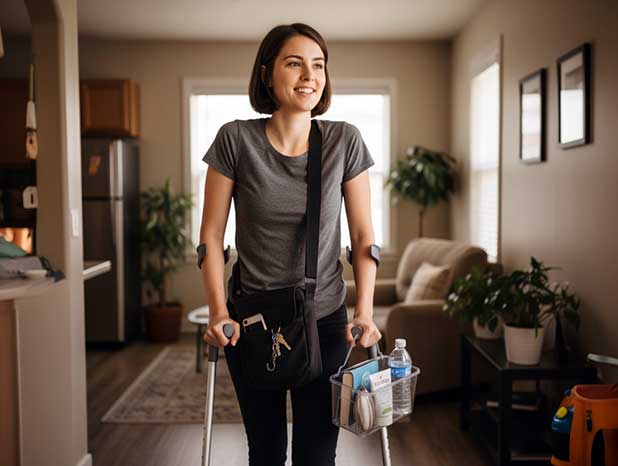
Light grocery bags clipped to carabiners hang from the crutches, keeping her hands free on the grips for balance.
-
Coffee and water bottle fix
The problem: Drinks spill when your hands are occupied.
The solution: Use a travel mug with a handle looped to a carabiner or switch to a hydration backpack with a drinking tube.
- Pick leak-proof lids and fill drinks three-quarters full to avoid slosh.
- Cold drinks are safer than hot coffee if you slip.
-
Phone holder mount
The problem: Answering calls or checking directions breaks your stride.
The solution: Clamp a bike phone mount to your non-dominant crutch handle and pair with a Bluetooth headset for hands-free calls.
- Use a screen protector—drops happen.
- Mount on the crutch that leaves your free hand available.
-
Shower chair plus handheld sprayer
The problem: Standing showers are exhausting and risky when non-weight bearing.
The solution: Add a shower chair, handheld showerhead, and non-slip mat so you can stay seated while you rinse.
Safety warning
Always pair the chair with a non-slip mat and grab bars (permanent or suction-cup) to avoid falls on wet floors.
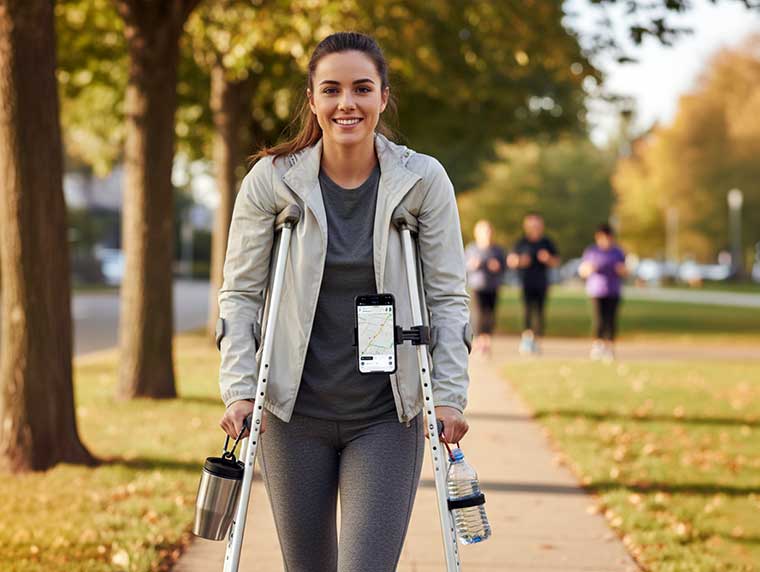
Phone mount and carabiners keep her drink and navigation steady so both hands stay on the grips.
-
Rolling backpack system
The problem: Regular backpacks add shoulder strain and throw off balance.
The solution: Use a rolling backpack or laptop bag with smooth wheels and pull it beside you on flat surfaces.
- Look for lightweight models under five pounds.
- Great on smooth floors and sidewalks; avoid stairs, gravel, or snow.
-
Retractable lanyard for keys
The problem: Fishing for keys while balancing on one leg is a fall risk.
The solution: Clip keys and access cards to a heavy-duty retractable lanyard on your belt loop or wear it around your neck.
-
Kitchen prep rolling cart
The problem: Cooking demands carrying ingredients, pots, and plates.
The solution: Use a three-tier rolling cart as a mobile prep station to shuttle items from fridge to stove to table.
- Stock it with plates, utensils, napkins, and a small cutting board.
- Sit on a tall stool while cooking to reduce fatigue.
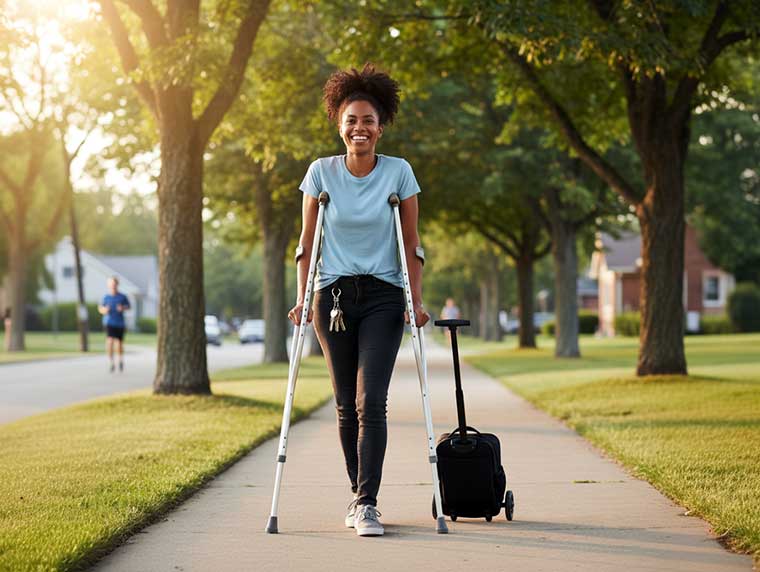
Rolling backpack glides beside her so the crutches stay light, and a retractable key lanyard keeps essentials within reach.
The first day I used the cart, I stopped making five trips between the fridge and stove—and my shoulders thanked me.
-
Apron with deep pockets
The problem: You need to move essentials but cannot hold them.
The solution: Wear a carpenter or gardening apron with deep pockets for phone, wallet, remotes, snacks, and meds.
-
Sock slider for dressing
The problem: Putting on socks while non-weight bearing is awkward.
The solution: Use a sock aid device: load the sock on the plastic cradle, drop it to the floor with the cords, slide your foot in, and pull.
This was the first tool that let me get dressed without a sighing family member nearby.
-
Reacher grabber tools
The problem: Anything you drop feels out of reach.
The solution: Keep 32-inch reacher grabbers in high-traffic rooms so you can pick up items, pull blankets, or hit light switches without bending.
Pro tip: Buy two or three and choose a model with a rotating head and magnet tip for keys.
-
Plastic storage tote on a rope
The problem: Moving laundry or supplies takes too many trips.
The solution: Drag a lightweight plastic tote with a short rope handle across smooth floors to haul laundry, toys, or work gear.
-
Bed tray table
The problem: Extra time in bed or on the couch needs a stable surface.
The solution: An adjustable bed tray table with a cup holder, tilting surface, and sturdy legs becomes a workspace for meals, laptops, or puzzles.
-
Elastic-waist wardrobe switch
The problem: Buttons, belts, and laces are hard to manage on one leg.
The solution: Wear elastic-waist pants or skirts, pull-over tops, and slip-on shoes. If you need dress pants, size up to fit a boot or swelling.
Swapping to elastic waistbands felt like giving up style—until I realized it gave me back independence at 6 a.m.
-
Strategic furniture rearrangement
The problem: Home layouts can become obstacle courses.
The solution: Create clear “crutch lanes,” move rugs that slip, position remotes and chargers within reach, and keep pathways to the bathroom unobstructed.
For more home safety ideas, see CDC’s fall prevention tips.
-
Crutch bag attachment
The problem: Pockets cannot hold everything you need at hand.
The solution: Attach a crutch bag or small bike handlebar bag to the non-dominant crutch for phone, wallet, meds, snacks, and a charger—keep weight under two pounds.
Bonus tips: what not to do
Avoid these common mistakes
- Backpacks that overload your shoulders and affect balance.
- Cheap crutch tips that lose traction—replace them every few weeks.
- Carrying hot liquids without sealed lids.
- Shoes with laces that can catch or untie; choose slip-ons.
- Pushing through upper-body fatigue instead of resting.
- Skipping help on tasks that truly need another set of hands.
Create your own crutch hacks
When you hit a frustrating task, run through this checklist:
- Can I eliminate the task? (meal delivery instead of a store run)
- Can I modify the space? (move items to waist height or clear paths)
- Can a simple tool solve it? (carabiner, grabber, rolling cart)
- Can someone else help? (friends, family, or a service)
Join the community
Share your own hacks with other crutch users in forums or social groups. The best ideas often come from people living the same challenges.
Quick reference: essential hacks checklist
Buy these first (week 1)
- 2-4 large locking carabiners
- Reacher grabber tool
- Shower chair plus handheld showerhead
- Travel mug with a secure lid
Add these in week 2 or 3
- Rolling backpack or kitchen cart
- Bed tray table
- Crutch bag attachment
- Sock aid device
Free hacks to do today
- Rearrange furniture for clear pathways.
- Switch to elastic-waist clothing and slip-on shoes.
- Wear an apron with pockets for essentials.
- Attach keys to a retractable lanyard.
Need better gear? Check our expert reviews
Upgrade your setup with reviewed products that reduce pain and make mobility safer.
Best Forearm Crutches
We tested top models to find the most comfortable forearm crutches that ease shoulder strain.
Read reviewBest Crutch Cushions
Underarm and hand cushions that actually help—no more raw skin from standard issue pads.
Read reviewWinter Crutch Accessories
Essential traction and glove picks for ice, snow, and slick indoor floors.
Read reviewBest Knee Scooters
When crutches are not the answer, these knee scooters deliver stability and speed.
View all reviewsClosing thoughts
You will not use all 15 hacks, but the right two or three can change your recovery entirely. Pick one to try today so you can move safer and save energy tomorrow.
Author’s crutch story
These hacks came from eight weeks on crutches after ankle surgery—and a lot of trial and error. For more of the journey and lessons, see the Living with Crutches hub.
Share your hack
Have a crutch hack that saved your day? Send it in via our contact form so we can feature it for other readers.
FAQ
Use locking carabiners on the grips for light bags, add a crutch bag for essentials, and switch to a rolling backpack or cart for heavier items so your hands stay on the handles—all while keeping within the weight-bearing limits your clinician set.
Pair a shower chair with a handheld sprayer, non-slip mat, and grab bars (or suction-cup versions). Stay seated to keep weight off the injured leg, keep your towel within reach, and follow any balance/weight-bearing precautions your doctor gave you.
Use a rolling kitchen cart to move ingredients and dishes, sit on a tall stool while prepping, choose lightweight pans, and keep frequently used items at counter height. Stop if any task forces you to break your prescribed weight-bearing limits.
Wear an apron with deep pockets, attach a crutch bag to the non-dominant crutch, and use a retractable lanyard for keys so both hands stay on the grips when moving, keeping your gait and balance cues from your PT.
Use a railing when you can: “up with the good” (good leg first) and “down with the bad” (injured side plus crutches first). If you are unsteady, sit and scoot or ask for help, and follow the specific stair guidance your clinician provided.
Check fit, keep pads below the underarms, and drive weight through your hands with a slight elbow bend. Add padded grips, consider gel underarm pads, and rest before fatigue changes your gait. Pain, numbness, or tingling are reasons to pause and refit.