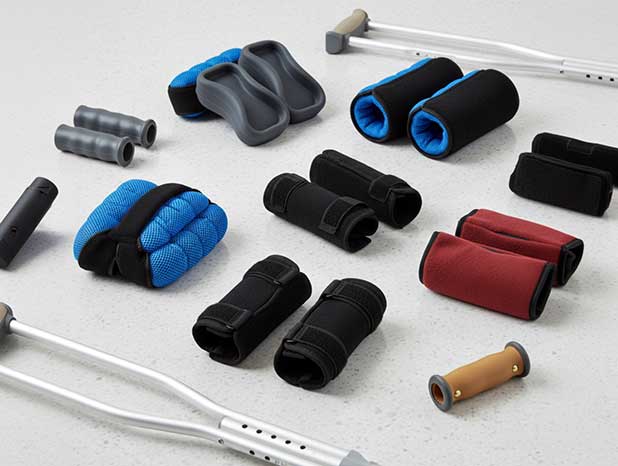
The crutch pads market is steady, driven by predictable replacement cycles and comfort upgrades. If you stock crutches, you need a pad strategy that keeps margins healthy without clogging shelves. Expect clear pricing tiers and margin guardrails throughout. This guide is written for clinic buyers, DME retailers, and e-commerce sellers who stock crutches or related accessories. It combines conversations with clinic buyers and DME owners plus hands-on testing of foam, gel, and memory foam pads on standard adult crutches.
TL;DR for pad buyers
- Demand drivers: Replacement cycles run 3 to 12 months depending on material, with post-surgery peaks in winter and early spring.
- Price bands: Foam pads retail $8 to $15, gel pads $18 to $35, memory foam $12 to $28, with wholesale running 40 to 60 percent below retail.
- Supplier checks: Request samples, verify MOQ under 100 units for testing, confirm lead times under 3 weeks, and check return policy on defects.
Table of contents
- Market snapshot
- Segments by material, user, and channel
- What crutch pads actually do
- Pricing guide
- Sample assortments by business type
- Competitive landscape
- Material comparison
- Quality and fit checks
- Compliance and claims
- Seasonality and demand signals
- Simple 5-step playbook for buying your first batch
- Back-of-envelope demand planning for crutch pads
- Choosing suppliers
- FAQ
- Conclusion
Market snapshot
Crutch pads are a high-turn accessory in the DME space. Buyers fall into three groups:
- Clinics and rehab centers: Bulk buyers replacing worn pads on loaner crutches every 3 to 6 months.
- DME retailers: Stock replacement pads as add-ons to new crutch sales and standalone SKUs for comfort upgrades.
- E-commerce sellers: Target direct-to-consumer with gel and memory foam upgrades, often bundled with crutch tips and bags.
Common use cases include post-surgery recovery, injury rehabilitation, and long-term mobility support. Pads wear out faster than crutches, creating predictable replacement cycles.
If this is you: Clinics should prioritize durability, washability, and reliable supply. DME retailers should lead with clear good/better/best price ladders. E-commerce sellers should differentiate with colors, bundles, and branding.
What crutch pads actually do
Crutch pads cushion the two spots that take the brunt of crutch use: underarms and hand grips. Underarm pads reduce rubbing, bruising, and sweat build-up against the frame, while grip pads cut down on palm blisters, numbness, and odor from long days of use. New patients often complain about soreness or chafing within the first week on crutches—pads and sleeves are the first line of defense to keep them comfortable and compliant.
Segments by material, user, and channel
By pad type and material
- Foam pads: Basic polyurethane or open-cell foam. Budget-friendly, lightweight, 3 to 6 month lifespan.
- Gel pads: Silicone or polymer gel cores. Superior pressure distribution, 6 to 12 month lifespan, higher price point.
- Memory foam pads: Viscoelastic foam with fabric or vinyl covers. Mid-tier comfort, 12 to 18 month lifespan, machine-washable covers available.
- Hygiene liners: Disposable or washable fabric sleeves worn over pads. Popular in clinics for infection control.
By end user
- Institutional buyers: Hospitals, clinics, physical therapy centers. Prioritize durability, cleanability, and bulk pricing.
- Retail customers: Individuals buying replacements or upgrades. Prioritize comfort, brand reputation, and fast shipping.
- Online sellers: Amazon FBA, Shopify stores, niche mobility sites. Focus on differentiation through materials, colors, and bundling. Include “cover sets” that pair underarm plus hand-grip pads, and offer a few neutral colors—bright colors sell slowly unless paired with a bundle.
By channel
- Direct from manufacturer: Best margins, higher MOQ, 30 to 60 day lead times.
- Medical distributors: Lower MOQ, faster turnaround, 20 to 35 percent markup over wholesale.
- Drop-ship suppliers: No inventory risk, slim margins, limited control over packaging and shipping speed.
Pricing guide
Pricing varies by material, brand, and purchase volume. Here are typical ranges as of January 2025:
| Tier | Material | Retail price (USD) | Wholesale price (USD) | Best for |
|---|---|---|---|---|
| Good | Basic foam | $8 - $15/pair | $3 - $7/pair | Budget-conscious buyers, short-term use |
| Better | Memory foam | $12 - $28/pair | $6 - $14/pair | Mid-range comfort, longer replacement cycles |
| Best | Gel or gel-foam hybrid | $18 - $35/pair | $9 - $18/pair | Premium comfort, clinical use, high-margin upsells |
Volume discounts of 10 to 20 percent apply at 100-unit, 500-unit, and 1,000-unit breaks. Private label minimums start around 500 units with 50 to 65 percent margins.
Sample assortments by business type
- Small clinic or PT office: Carry 2 foam SKUs (a basic grey clinic pad and a slightly thicker retail foam pad), 1 mid-tier memory foam pad, and 1 hygiene sleeve option. Keep 10 to 20 pairs of each on hand.
- Independent DME retailer: Stock 1 foam pad, 1 mid-tier memory foam, and 1 gel option in neutral colors. Start with 24 to 48 pairs per SKU and reorder when you hit ~30 percent remaining.
- E-commerce shop: Lead with one premium gel or memory foam SKU and one value foam option. Bundle pads with tips or bags to lift average order value.
Competitive landscape
The market splits between established medical equipment brands and generic suppliers. Expect these players:
National brands
- Drive Medical: Wide product line, strong clinic presence, reliable quality.
- Medline: Hospital-grade pads, bulk packaging, institutional focus.
- Carex: Consumer-focused, retail-ready packaging, mid-tier pricing.
- Vive Health: E-commerce optimized, gel and memory foam specialty, direct-to-consumer marketing.
Private label and generic
Many DME retailers source unbranded pads from overseas manufacturers and apply their own labeling. Typical minimums run 500 to 1,000 units. Lead times stretch 45 to 90 days including shipping. Margins improve 15 to 25 percent over branded stock, but you own the inventory risk and customer service.
Material comparison
| Material | Pros | Cons | Best use |
|---|---|---|---|
| Gel | Best pressure relief, long lifespan, premium perception | Higher cost, heavier, limited color options | Clinical settings, heavy users, high-margin upsells |
| Foam | Lowest cost, lightweight, fast turnover | Shortest lifespan, compresses quickly, basic comfort | Budget buyers, short-term rentals, high-volume replacement |
| Memory foam | Good comfort-to-cost ratio, washable covers, medium lifespan | Heat retention, slower rebound than gel | Retail sweet spot, e-commerce, mid-tier buyers |
| Material | Comfort | Lifespan | Typical margin |
|---|---|---|---|
| Foam | 🙂 Basic | 🔄 Fast replacement | 💵 Highest |
| Memory foam | 😊 Better | ⏳ Medium | 💵💵 Strong |
| Gel | 😌 Best | 🛡️ Longest | 💵💵 Premium |
Quality and fit checks
Buyer fast checks
- Fit test: Order samples and test on your stock crutches before committing to volume.
- Smell test: Open a fresh pack and check for chemical odor. Strong smells signal low-grade foam.
- Squeeze test: Compress pad with thumb. Good pads rebound in 2 to 3 seconds, cheap foam stays flat.
- Cover check: Look for removable, washable covers on memory foam. Non-washable pads need replacement sooner.
- Warranty ask: Reputable suppliers offer 30 to 90 day defect replacement. No warranty is a red flag.
Five must-haves
- Fit: Pad interior diameter matches your crutch tubing (usually 1 inch for adult underarm crutches). Universal pads should include adjustable Velcro or elastic.
- Material density: Pads should resist bottoming out under 200 lbs of pressure. Check density specs or sample test with known weight.
- Sweat resistance: Covers should be moisture-wicking or water-resistant. Vinyl works for clinics, breathable fabric for retail.
- Odor control: Antimicrobial treatments or silver-ion fabrics reduce smell and bacteria growth. Critical for loaner programs.
- Cleaning: Pads should wipe clean with standard disinfectants without degrading. Memory foam covers should be machine-washable.
| Pad type | Typical tube diameter | Typical pad length |
|---|---|---|
| Adult underarm | 0.95" - 1.05" | 7" - 8" |
| Youth underarm | 0.75" - 0.95" | 6" - 7" |
| Adult hand grip | 0.9" - 1.1" | 4" - 5" |
For detailed sizing specs, see our crutch choosing guide. Hygiene protocols are covered in our cleaning and odor control resource.
Compliance and claims
Not medical or legal advice
This guide is for informational and business planning purposes only, not medical or legal advice. Always follow local regulations and guidance from clinicians or your compliance team.
Regulations vary by country and business type, so check with your regulatory advisor or local authority before relying on any summary.
Crutch pads fall under FDA Class I medical devices as accessories when sold for medical use. Most pads are exempt from premarket notification (510k), but you still need to:
- Register as a medical device establishment if you are the importer of record.
- Avoid therapeutic claims like "heals nerve damage" or "prevents injury." Stick to comfort and pressure relief.
- Comply with labeling requirements: intended use, manufacturer info, single-use warnings if applicable.
Return pitfalls
Open packages and hygiene concerns make returns tricky. Many retailers mark pads as final sale unless defective. If you accept returns, inspect for wear and verify packaging integrity before restocking. Defect rates above 2 percent signal supplier quality issues.
Seasonality and demand signals
Crutch pad sales follow injury patterns:
- Winter spike: Slip-and-fall injuries peak January through March. Stock extra gel and memory foam pads for comfort-seeking buyers.
- Spring surgery season: Elective orthopedic procedures cluster in April and May. Clinics restock loaner crutch pads ahead of demand.
- Summer sports injuries: June through August sees ankle and knee injuries. Replacement pad sales tick up as patients upgrade from basic foam.
- Holiday promos: Black Friday and Cyber Monday drive e-commerce bundles. Package pads with crutch tips and bags for gift-ready sets.
Search interest for crutch pads tends to spike in winter when falls and injuries are more common, so plan inventory buys in Q4 to capture that demand.
| Quarter | Typical demand | Stock focus |
|---|---|---|
| Q1 | ⬆️ Highest (winter slips) | Gel + memory foam comfort upgrades |
| Q2 | ↗ Spring surgery surge | Clinic underarm pads + hygiene sleeves |
| Q3 | → Moderate (sports injuries) | Value foam replacements + bundles |
| Q4 | ↗ Ramp for winter + holiday promos | Mixed tiers, giftable bundles, inventory buffer |
Simple 5-step playbook for buying your first batch
- Clarify your mix: Match assortments to your business type—clinic, DME retail, or e-commerce.
- Pick good/better/best: Choose your foam, memory, and gel tiers with target margins in mind.
- Test before you buy: Request samples and run the fit, smell, and squeeze tests on your own crutches.
- Place a small test order: Start under 100 units and track turns for 60 to 90 days.
- Scale the winners: Reorder only the SKUs that hit your turn and margin targets; trim the rest.
Back-of-envelope demand planning for crutch pads
As a rough rule, many clinics see about one full pad replacement per active crutch pair per year. If you run 50 loaner crutches in rotation, planning for 50 to 75 replacement pad pairs annually usually covers wear, lost pads, and hygiene upgrades.
Choosing suppliers
MOQ and lead times
Minimum order quantities vary by channel:
- Distributors: 25 to 50 pairs, 5 to 10 day lead time. Good for testing new SKUs.
- Manufacturers: 100 to 500 pairs, 30 to 60 day lead time. Best margins, higher upfront commitment.
- Private label: 500 to 1,000 pairs, 45 to 90 day lead time including customization and shipping.
Most buyers I talk to underestimate lead times; build a buffer for seasonal spikes, port delays, and packaging tweaks.
Sample policy
Always request samples before volume orders. Most suppliers charge $10 to $25 per sample pair, refundable on first bulk order. Test fit, comfort, and durability over two weeks with real users. In my experience, one bad sample saves you from 500 bad units.
Typical margins
Expect these margins when buying direct:
- Foam pads: 50 to 60 percent margin (wholesale $3 to $7, retail $8 to $15).
- Memory foam: 50 to 55 percent margin (wholesale $6 to $14, retail $12 to $28).
- Gel pads: 45 to 50 percent margin (wholesale $9 to $18, retail $18 to $35).
Distributor purchases reduce margins by 15 to 20 percent but offer faster turns and lower inventory risk.
Drop-ship notes
Drop-shipping works for low-volume sellers but cuts margins to 20 to 30 percent. You lose control over packaging, ship speed, and customer experience. Returns go back to you, not the supplier. Best used for testing demand before committing to inventory.
Frequently asked questions
Standard foam pads often last 3 to 6 months with daily use, gel pads around 6 to 12 months, and memory foam pads 12 to 18 months depending on weight, sweat, and cleaning. In practice, most clinics we talk to replace underarm pads roughly every 6 months and forearm pads about once a year.
Yes, gel pads generally distribute pressure more evenly than standard foam. Gel conforms to body contours and rebounds slowly, reducing peak pressure points. Research and pressure mapping tests typically show gel and memory foam spread pressure more evenly than basic foam, which often translates to more comfort over long days. Best choice depends on budget and patient comfort needs.
Most replacement pads fit standard adult underarm crutches with 1 inch diameter tubing. Universal pads use Velcro or elastic sleeves to fit tubing from 0.875 to 1.125 inches. Youth crutches may need smaller pads around 0.75 inches. Always check pad interior diameter and crutch tubing specs. Measure twice, order once.
Depends on the cover. Pads with removable, machine-washable covers are clinic-friendly. Foam cores themselves are not machine washable and will break down. Wipe foam cores with disinfectant wipes between patients. Look for antimicrobial covers that resist odor and bacteria. Washable covers extend pad life and cut replacement costs.
Wholesale margins run 40 to 60 percent for DME retailers buying direct from manufacturers. Distributors mark up 20 to 35 percent over wholesale. Private label pads offer 50 to 65 percent margins if you order 500-plus units. Gel and memory foam pads carry higher margins than basic foam. Volume discounts kick in at 100, 500, and 1,000 units.
Conclusion
The crutch pads market rewards buyers who understand materials, pricing tiers, and replacement cycles. Gel pads deliver premium comfort at premium prices. Memory foam hits the sweet spot for most retail buyers. Basic foam keeps costs down for high-volume clinical use.
Start with sample orders. Test fit and comfort on your own crutches. Verify supplier lead times and defect rates before committing to volume. Stock multiple tiers to capture budget buyers and upsell comfort seekers.
Need more accessories guidance? Check our best crutch accessories roundup for tips, bags, and seasonal picks. For patient-facing copy and comfort positioning, see our consumer guide, Best Crutch Cushions for Underarm Support.
Ready to source crutch pads?
Request samples from three suppliers. Compare fit, comfort, and price. Place a test order under 100 units and track turns before scaling up.
Contact us for supplier leads