Real-world testing of the top knee scooters so you can choose a knee walker that keeps your recovery
mobile, comfortable, and pain-free.
January 20, 202515 min readCrutchesGuide Team
Bottom line
Knee scooters (a.k.a. knee walkers) deliver freedom from crutches while keeping your injured foot off the ground. We
reviewed the top three knee scooters for 2025 so you can match terrain, time away from crutches, and budget to the
right model.
Knee scooters have exploded in popularity because they are so much easier to live with than traditional crutches.
Instead of relying on your upper body to shuttle you around, you rest the injured leg on a guided platform and
steer with handlebars. That takes the pressure off weak limbs, lets you hold coffee, and keeps you moving through
daily life.
This guide dives into the top tested models, the safety and comfort features we demand, and how to make any knee
scooter feel like it was built for your body.
What Is A Knee Scooter?
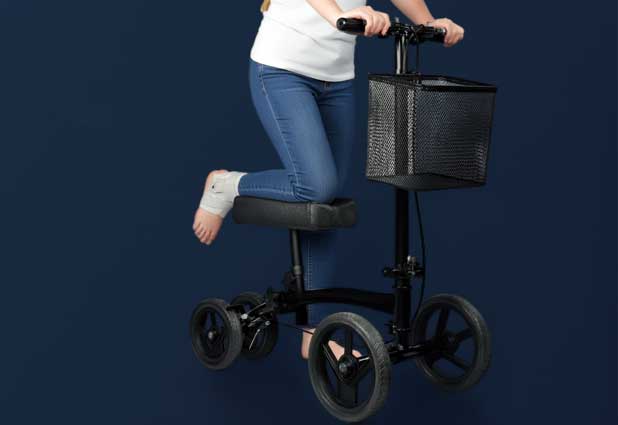
A knee walker (aka knee scooter, leg walker, knee cruiser, or roll-about) is a
wheeled mobility device for ankle or foot injuries. You rest your injured knee on a padded shelf, push with your good
leg, and steer with bicycle-style handlebars.
Knee scooters feel far more intuitive than crutches, especially for people who need to steer around homes,
apartments, or workspaces. Most models are built for comfort, braking control, and storage-things crutches can’t
deliver.
How it works
The injured knee stays completely supported on the padded platform, so you never put weight on your foot or ankle.
While the handlebars handle steering, the brakes keep you planted when you stop. Adjust the height to keep your
good leg relaxed and your posture upright.
Key Components
Padded knee platform: Cushioned surface that prevents sliding and pressure points.
Handlebars: Height-adjustable steering with brake levers like a bicycle.
Wheels: 8-inch indoor wheels or 12-inch pneumatic tires for outdoors.
Frame: Lightweight, powder-coated aluminum keeps the scooter portable.
Basket/Storage: Built-in or optional baskets/attachments for backpacks or groceries.
Brakes: Dual hand brake and parking brake for confident stopping.
Top 3 Knee Scooter Reviews
Best Overall4.8/5
Drive Medical DV8 Knee Scooter
Best for: Short- to medium-term recovery, indoor use, and ease of travel.
Ultra-lightweight and remarkably stable, the DV8 makes it easy to stay active indoors without straining your
good leg. The deluxe knee cushion feels plush, and the folding frame fits in SUVs or storage closets.
In my own testing, the DV8 was noticeably easier to lift into a trunk compared to other similar models.
Weight19 lbs
Capacity300 lbs
WheelsFour 8" PU
AdjustmentsHandlebar 33"–37.5", Knee pad 17.5"–21.5"
Why we love it
The contoured knee pad prevents your leg from drifting, and the frame collapses to a suitcase-friendly size. At
19 lbs, it is the lightest full-featured scooter we tested.
Best for: Outdoor enthusiasts, weightier users, and rugged terrain.
KneeRover builds a kneewalker that behaves more like a miniature ATV. The tie-rod steering and 12" pneumatic wheels
glide over grass, gravel, and uneven sidewalks without fuss.
When I rolled the KneeRover over gravel and curb cut edges, the big tires genuinely made it feel less sketchy.
Wheel size12" pneumatic
Capacity400 lbs
Weight27 lbs
Height rangeHandlebar 35"–47", Knee pad 19"–22.5"
Premium features
Automotive-style tie-rod steering gives pinpoint control, even on slopes, and the double-bar frame resists flex
when heavier users hop aboard.
Pros
Handles grass, gravel, and dirt
400 lb capacity
Precise steering
Rolls smoothly for taller riders
Cons
Heavier (27 lbs)
High price range
Bulky to store
Overkill indoors
Price range: $300–$400 · Warranty: Limited lifetime frame, 1 year on wheels
Best value4.6/5
Roscoe Knee Scooter with Basket
Best for: Budget buyers, daily errands, and office or home use.
Roscoe balances comfort and price with PU wheels that never go flat and a large basket that easily hauls
essentials. The folding frame requires no tools and works for most heights.
Weight22.8 lbs
Capacity350 lbs
Wheel size8" PU
Height range4'11"–6'8"
Best value pick
PU wheels never go flat and the basket is larger than competitors'. Roscoe gives you the essentials without a
premium price tag.
Pros
Great price-to-quality ratio
Large basket included
Tool-free assembly
Wide height range
Cons
Not suited to grass or gravel
Braking system is basic
Less plush knee pad
Price range: $130–$180 · Warranty: 1 year limited
Quick Comparison Table
Side by side comparison of the three featured knee scooters for 2025.
Feature
Drive Medical DV8
KneeRover All-Terrain
Roscoe with Basket
Weight
19 lbs
27 lbs
22.8 lbs
Weight capacity
300 lbs
400 lbs
350 lbs
Wheel size
8 inches
12 inches
8 inches
Terrain
Indoor / smooth
All-terrain
Indoor / smooth
Price range
$150–$200
$300–$400
$130–$180
Best for
Travel & lightweight
Outdoor active
Budget & value
Tip: swipe sideways on smaller screens to see all scooter columns.
Note: Prices fluctuate. Check live stores for the current best price before buying.
Complete Buying Guide
Choose a knee scooter that matches how you move. From safety and comfort to terrain and storage, these guidelines
keep your recovery smooth.
We combine hands-on testing with manufacturer specs and medical guidelines when we recommend mobility
aids.
1. Safety first
Safety is the non-negotiable baseline. Look for models that include:
Large wheels: At least 7.5" in diameter so the scooter feels stable.
Quality brakes: Dual braking system (hand brake + parking brake) for confident stopping.
Offset knee platform: Keeps weight centered over the frame.
Bike-style steering: Crisp left/right control for tight corners.
Trusted brand: Manufacturers with safety certifications and durable construction.
Safety warning
Cheap imports often skip brake locks, which means the scooter can roll away and cause a fall. Invest in a dedicated
brake and parking mechanism-your healing leg deserves the stability.
2. Comfort level
Comfort keeps you riding longer without pain.
Wide knee platform: Minimum width of 7" for better support.
Thick padding: At least 2" of foam to cushion your kneecap.
Contoured design: Prevents knee slippage for confident steering.
Adjustable handlebars: 10+ inches of height adjustment to match your posture.
Dual adjustable pads: Helps fit casts, boots, or extra bandaging.
3. Weight & portability
Consider how often you will move the scooter in and out of cars:
Lightweight: Under 25 lbs is easiest to lift and carry.
Foldable frame: Saves trunk space and hides the scooter in closets.
Quick-release mechanisms: Tool-free folding is a time saver.
Compact profile: Check folded dimensions against your vehicle or stairwells.
4. Weight capacity
Choose a rating slightly above your weight for long-term durability.
Standard: 250–300 lbs (most models).
Enhanced: 350 lbs for bulkier riders or heavy bags.
Bariatric: 400+ lbs for the heaviest users.
Safety tip: Leave at least a 50 lb buffer between your weight and the listed capacity to keep stress off
the frame.
5. Indoor vs. outdoor use
Wheel size determines where you can roll:
8" wheels: Ideal for indoor floors, tile, and smooth sidewalks.
12" wheels: Built for grass, gravel, and uneven pavement.
Pneumatic vs. solid: Air-filled tires soak up shock for a softer ride.
6. Price considerations
Knee scooters range from $130 to $400. Here is what each tier delivers:
Budget ($130–$180): Functional and indoor-focused with basic padding.
Mid-range ($180–$250): Better build quality, smoother ride, and more comfort features.
Premium ($250–$400): All-terrain tires, higher capacities, and refined adjustability.
Buy vs. rent
Rental cost: $40–$100/week or $150–$200/month.
If you need a knee scooter for more than six weeks, buying is usually cheaper, and you can resell it for 50–70% of
your cost afterward.
How to Make Your Knee Scooter More Comfortable
Adjustments matter just as much as the model you pick.
Step 1: Adjust knee platform height
This is the most important setting. Too low and you strain your good leg; too high and your healing leg takes weight.
Correct height test
Stand upright with your injured leg on the platform. Your good knee should be slightly bent. If your good heel lifts
or your knee locks out, adjust the scooter until your posture feels neutral.
Step 2: Adjust knee pads
Higher-end scooters let you move dual pads closer together or farther apart. Position them so they cradle your knee
without pressing on casts or bandages.
Budget tip: On single-pad models, add foam padding or a folded towel to customize the fit.
Step 3: Set the correct offset
Most scooters allow offsetting toward the good leg. This prevents interference with the wheels and eases steering.
Improves stability when you lean into turns.
Keeps the good foot clear of the wheels and frame.
Reduces strain on your core muscles.
Makes the steering feel more natural.
Frequently Asked Questions
Is a knee scooter safe and stable?
Yes, when you choose a quality model with big wheels, dual brakes, and a reputable brand. Many users find them more
stable than crutches because they support the body on a wheeled platform.
Studies show they are often preferred for comfort and ease of use.
Can I use a knee scooter with a walking boot?
Absolutely. Knee scooters work great with walking boots, casts, or bandages. Just adjust the knee pad height to
accommodate the extra bulk. Dual-adjustable pads simplify the process.
Yes. Knee scooters count as a mobility device, qualify for pre-boarding, and most fold small enough for overhead
bins or gate check. TSA allows them through security. Pack a lightweight foldable model (like the Drive Medical
DV8) for the easiest travels and see our
airport navigation guide for tips.
Final Verdict
Here is how we would match each scooter to your recovery priorities.
Best overall
Drive Medical DV8 – lightweight, comfortable, and a smooth indoor ride plus easy travel setup.
Best for outdoors
KneeRover All-Terrain – premium off-road build, tie-rod steering, and 12" pneumatic wheels handle any trail.
Best value
Roscoe Knee Scooter – budget-friendly, never-flat PU wheels, and a large basket for errands.
Our recommendation
Most people will appreciate the Drive Medical DV8 for its portability, comfort, and trusted build. If you plan to
be outdoors or want long-term use, the KneeRover All-Terrain is worth the premium spend.
Investing in the right knee scooter will dramatically improve your recovery and quality of life. Choose carefully,
double-check your adjustments, and enjoy the independence a knee walker delivers.